
Notre
Science

Notre approche
L’approche pan-PPAR
Les PPAR (récepteurs activés par les proliférateurs de peroxysomes) sont des facteurs de transcription nucléaires activés par des ligands qui jouent un rôle central dans la régulation de l’homéostasie métabolique, en gouvernant l’oxydation des lipides, le métabolisme du glucose, la signalisation inflammatoire et l’activité fibrogénique.
Lanifibranor est un agoniste pan-PPAR de nouvelle génération expérimental, doté d’un profil d’activation différencié et équilibré sur les trois isoformes PPAR α, δ et γ, conçu pour engager les récepteurs de manière significative tout en évitant les effets indésirables associés aux agonistes PPAR sélectifs ou partiels.
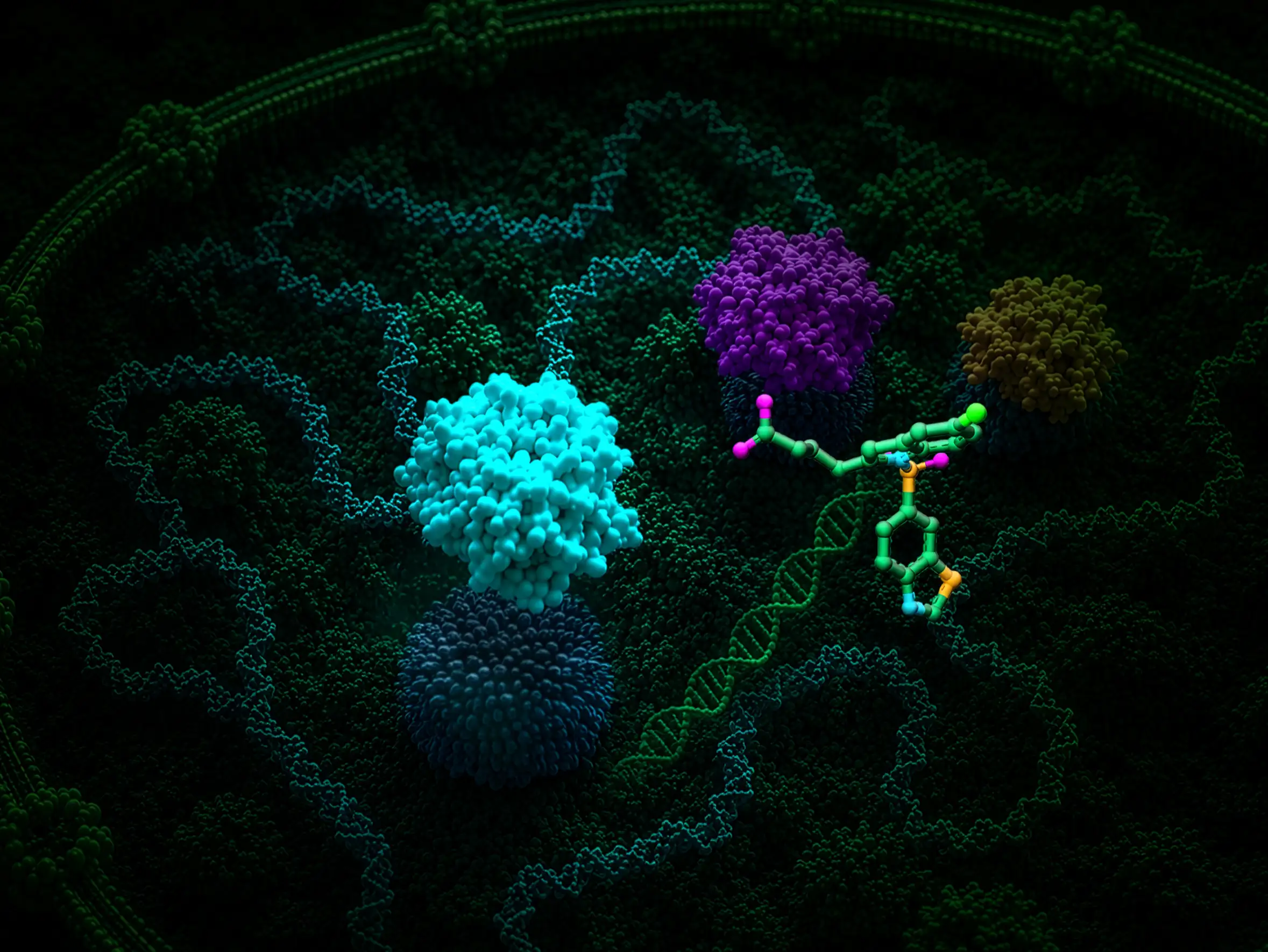

PPAR-α
Réduit l’accumulation de graisses dans le foie, favorise l’oxydation des acides gras et atténue la signalisation inflammatoire.

PPARδ
Module les réponses immunitaires innées, favorise l’activité anti-inflammatoire et supprime l’activation des cellules étoilées hépatiques.

PPAR-γ
Restaure la sensibilité à l’insuline, induit la production d’adiponectine et inhibe la signalisation fibrogénique dans le foie.
Par l’engagement simultané et équilibré des trois isoformes, l’approche pan-PPAR vise à agir sur la physiopathologie sous-jacente de la maladie tout en exerçant un effet antifibrotique direct, ciblant ainsi simultanément le dysfonctionnement métabolique qui alimente la progression de la MASH et la fibrogénèse.
Cette approche mécanistique est étayée par des données cliniques préliminaires et traduit une conviction scientifique fondée : la MASH est une maladie complexe qui exige une réponse thérapeutique à la hauteur de cette complexité.

Notre programme clinique
Notre candidat médicament, lanifibranor, est un agoniste pan-PPAR expérimental de première classe en cours d’évaluation pour le traitement de la MASH, avec le potentiel d’agir sur plusieurs voies pathologiques, notamment l’accumulation de graisses hépatiques, l’inflammation et la fibrose, tout en ciblant les facteurs métaboliques systémiques, sous la forme d’une thérapie orale administrée une fois par jour.
L’étude de Phase 2b NATIVE, évaluant lanifibranor chez des patients atteints de MASH non cirrhotique confirmée par biopsie, a été complétée en 2020. Lanifibranor a été le premier candidat médicament en développement à atteindre simultanément, dans le cadre d’une étude de Phase 2b, la résolution de la MASH sans aggravation de la fibrose, l’amélioration de la fibrose sans aggravation de la MASH, ainsi que le critère composite combinant ces deux endpoints. Ces résultats positifs ont établi une base solide pour le programme de Phase 3 en cours, NATiV3.

Points cliniques clés (dose de 1 200 mg) de l'essai de Phase 2b NATIVE
Résolution de la MASH
49
des patients ont vu leur MASH se résoudre sans aggravation de la fibrose (contre 22 % sous placebo).
Amélioration de la fibrose
48
des patients ont présenté une amélioration d’au moins un stade de la fibrose hépatique sans aggravation de la MASH (contre 29 % sous placebo).
Résolution de la MASH et amélioration de la fibrose
35
des patients ont atteint simultanément la résolution de la MASH et l’amélioration de la fibrose (contre 9 % sous placebo).
Au-delà du foie
Lanifibranor a également démontré des améliorations significatives de la santé cardiométabolique globale, incluant un meilleur contrôle glycémique (HbA1c), une amélioration de la sensibilité à l’insuline et un profil lipidique plus favorable.
Tolérance
Lanifibranor a été bien toléré.
Phase 3 NATiV3 Trial
Nous menons actuellement NATiV3, une étude mondiale de Phase 3 visant à évaluer l’efficacité et la tolérance à long terme de lanifibranor. L’essai est en cours dans plus de 350 centres cliniques répartis dans 24 pays.

Les participants à l’essai NATiV3 sont des adultes atteints de MASH confirmée par biopsie avec une fibrose modérée à avancée (F2–F3). L’essai est conçu comme un essai pivot destiné à soutenir les demandes d’approbation auprès de la FDA aux États-Unis et d’autorisation de mise sur le marché auprès de la Commission européenne dans l’Union européenne.
Les résultats principaux sont attendus au quatrième trimestre 2026.
Publications
PARIS MASH 2026: Beyond the Liver: Cardiovascular Effects of the Pan-PPAR Agonist Lanifibranor in Patients with Mash
DownloadPARIS MASH 2026: Lanifibranor Improves Metabolic and Histologic Features of MASH Across Multiple Preclinical Models: Convergent Pan-PPAR Activity
DownloadPARIS MASH 2026: Partial PPARγ Agonism Underlies Lanifibranor’s Preclinical Fluid/ Cardiovascular Safety Versus Full and Dual PPAR Agonists
DownloadPARIS MASH 2026: Lanifibranor Phase 1/2a Experience - PPARγ Engagement and Metabolic Activity Without Early Clinical Fluid Retention
DownloadEASL2026: Lanifibranor-Induced Histological and Cardiometabolic Improvements in MASH Are Independent of Weight Change and Associated With Adiponectin Induction
DownloadEASL 2026: Ultrastructural Assessment of Liver Sinusoidal Endothelial Cell Capillarisation in Metabolic Dysfunction-Associated Steatotic Liver Disease and Its Modulation by Lanifibranor
DownloadMASH-TAG 2026: Comparative Modulation of Adiponectin Across Select Therapeutics in Clinical Development for MASH with Fibrosis Identifies Lanifibranor as a Differentiated Metabolic Modulator
DownloadPublication in Clinical Gastroenterology and Hepatology: Biomarkers of histological response in patients with metabolic dysfunction-associated steatohepatitis treated with lanifibranor.
View the full articlePublication in Biomedicine & Pharmacotherapy: The pan-PPAR agonist lanifibranor reduces portal pressure independent of fibrosis reduction through the splanchnic vasculature.
View the full articlePublication in Journal of Hepatology: Pan-PPAR agonist lanifibranor improves insulin resistance and hepatic steatosis in patients with type 2 diabetes and MASLD.
View the full articleAASLD 2024: Combination therapy of lanifibranor with empagliflozin: metabolic improvement in patients with Metabolic Dysfunction-Associated Steatohepatitis and Type-2 Diabetes
Poster AASLD24 LEGENDPublication in Diabetes Research and Clinical Practice: MASLD/MASH and type 2 diabetes: Two sides of the same coin? From single PPAR to pan-PPAR agonists
View the full articlePublication in Nature Communications: The pan-PPAR agonist lanifibranor improves cardiometabolic health in patients with metabolic dysfunction-associated steatohepatitis
View the full articleEASL 2024: The pan-PPAR agonist lanifibranor improved altered liver vascular biology in MASH, associated with improved liver histology
DownloadEASL 2024: Improvements in MACK-3, a diagnostic test for active metabolic dysfunction-associated steatohepatitis, parallel response to lanifibranor therapy
DownloadAASLD 2023: Lanifibranor Reverses Insulin Resistance and Improves Glucose and Lipid Metabolism in Patients with Type 2 Diabetes and Metabolic Dysfunction-Associated Steatotic Liver Disease (MASLD)
DownloadAASLD 2023: Lanifibranor improves liver histology and markers of cardiometabolic health in patients with NASH independent of PNPLA3 genotype: a retrospective analysis of the NATIVE study
DownloadAASLD 2023: Lanifibranor-associated adiponectin increase correlates with improvement of histological and serum markers of NASH severity both in terms of activity and fibrosis
DownloadEASL 2023: The pan-PPAR agonist lanifibranor decreases portal pressure in models of both hepatic and prehepatic portal hypertension
DownloadEASL 2023: Unraveling the individual contributions of the PPAR isotypes to the pan-PPAR agonist Lanifibranor-induced improvements of the vascular alterations and liver histology in a rat model of early NAFLD
DownloadEASL 2023: The pan-PPAR agonist Lanifibranor improves increased portal pressure, endothelial dysfunction and liver histology in a rat model of early NAFLD
DownloadADA 2023: Lanifibranor Improves Markers of Cardiometabolic Health in Patients with NASH and Type 2 Diabetes, Correlated with Responses in Adiponectin Levels
DownloadLanifibranor-induced improvement of liver and cardiometabolic markers of NASH is associated with an increase in adiponectin
DownloadLanifibranor therapy reduces the FAST score
DownloadIdentification of biomarkers of histological response in patients with non-cirrhotic NASH treated with lanifibranor
DownloadLanifibranor improves markers of cardio-metabolic health in NASH patients independent of weight change
DownloadThe pan-PPAR agonist lanifibranor improves NonAlcoholic SteatoHepatitis (NASH) and glycemic control
DownloadAASLD 2021: Lanifibranor improves NASH, fibrosis and diastolic dysfunction in a hamster preclinical model of diet induced NASH
DownloadAASLD 2021: Liver Sinusoidal Endothelial Cell (LSEC) capillarization in NASH and its evolution following lanifibranor treatment: an exploratory study of the NATIVE clinical trial
DownloadAASLD 2021: Treatment response to the PAN-PPAR agonist lanifibranor in the NATIVE study: NASH resolution and fibrosis improvement are correlated
DownloadAASLD 2021: Lanifibranor treatment improves hepatic steatosis in patients with NASH, evaluated by histological grading and Controlled Attenuation Parameter (CAP)
DownloadAASLD 2021: Lanifibranor reverses fasting glucose levels to normoglycemia in prediabetic patients with nonalcoholic steatohepatitis (NASH)
DownloadThe New England Journal of Medicine publishes the results of the NATIVE Phase IIb clinical trial with lanifibranor in NASH
NEJMTreatment of Mucopolysaccharidosis type VI patients with odiparcil alone or in addition to enzyme replacement therapy: a phase IIa study WORDSymposium 2020
DownloadDifferential effects of selective- and pan-PPAR agonists on experimental steatohepatitis and hepatic macrophages Journal of Hepatology Sander Lefere, Tobias Puengel, Jana Hundertmark, ., Lindsey Devisscher, Guillaume Wettstein, Frank Tacke
DownloadAASLD 2020 : Selection based on SAF Activity score instead of NASH CRN NAFLD Activity Score leads to selection of a more severe NASH with more advanced fibrosis patient cohort in the NATIVE phase 2b study of the panPPAR agonist Lanifibranor
DownloadAASLD 2020: Effect of the panPPAR agonist lanifibranor on plasma biomarkers of liver necro‐inflammation and fibrosis in non‐cirrhotic NASH patients: additional results of the NA11 12TIVE Phase 2b trial.13
DownloadAASLD 2020: Efficacy of the panPPAR agonist lanifibranor on the histological endpoints NASH resolution and fibrosis regression is similar in type‐2 diabetic and non‐diabetic patients: additional results of the NATIVE Phase 2b trial in non‐cirrhotic NASH
DownloadOdiparcil, a potential glycosaminoglycans clearance therapy in mucopolysaccharidosis VI—Evidence from in vitro and in vivo models
PLOS ONE, May 2020Discovery of YAP-TEAD Protein-Protein interaction inhibitors for treating Malignant Pleural Mesothelioma
DownloadDiscovery of promising anti-cancer drug combination using YAP-TEAD inhibitors with standard of care treatment in mesothelioma and NSCLC cells
DownloadEvidence for Altered Peroxisome Proliferator Activated Receptor (PPAR) Pathway Activity in a Transgenic Mouse Model of Scleroderma (TbetaRIIgammak-fib): Analysis of Mouse Skin, Lung and Explanted Cells
DownloadIn vivo assessment of lung fibrosis’ prevention using the pan-PPAR agonist lanifibranor in the TbetaRIIgammak-fib (Transgenic Mouse Model of Scleroderma) mouse model of systemic sclerosis
DownloadIntracellular GAG Level in Leukocytes is a Promising Pharmacodynamic Biomarker for MPS VI
DownloadDesign, Synthesis, and Evaluation of a Novel Series of Indole Sulfonamide Peroxisome Proliferator Activated Receptor (PPAR) α/γ/δ Triple Activators: Discovery of Lanifibranor, a New Antifibrotic Clinical Candidate
DownloadThe New-Generation Pan-Peroxisome Proliferator-Activated Receptor Agonist IVA337 Protects the Liver From Metabolic Disorders and Fibrosis
DownloadIVA337, a PAN-PPAR agonist, reduces NASH features and inhibits the inflammasome in murin models of NASH
DownloadA rational approach for the discovery of NSD2 inhibitors for the treatment of multiple myeloma
DownloadIVA336 a Potential Substrate Reduction Therapy for Mucopolysaccharidose type-VI, -I, and -II Diseases
DownloadA rational approach for the discovery of inhibitors of NSD2 for the treatment of cancer
DownloadThe pan-PPAR agonist IVA337 has anti-fibrotic effects in multiple in vitro and in vivo fibrosis models
DownloadDiscovery of YAP-TEAD Protein-Protein interaction (PPI) inhibitors for the treatment of cancer
DownloadA Rational Approach for the Discovery of NSD2 Inhibitors for the Treatment of Cancer
DownloadInhibition of two NADPH-independent enzymatic activities: Aldehyde oxidase and Xanthine oxidase inhibition
DownloadRodent Pharmacokinetics and in vitro ADME Properties of IV3086: An orally available and brain penetrant NURR1/RXR Activator
DownloadA rational approach for the discovery of inhibitors of the YAP-TEAD interaction
DownloadIdentification of G9a inhibitors by AlphaLisa™ technology and hit confirmation using MT-Glo™
DownloadA rational approach for the discovery of inhibitors of NSD2 for the treatment of cancer
DownloadA rational approach for discovery of inhibitors of YAP-TEAD interaction
DownloadIdentification of G9a inhibitors by Alphalisa™ and hit confirmation using MT-Glo™
DownloadUltrafast LC-UV-ELSD-MS confirming the high quality of Inventiva’s screening collection
DownloadA rational approach for the discovery of inhibitors of NSD2 for the treatment of cancer
DownloadIdentification of novel EZH2 inhibitor scaffolds
DownloadA rational approach for discovery of inhibitors of YAP-TEAD interaction
DownloadOne Hour Pre-Infusion followed by Four Hours Co-Infusion of Elacridar as a Tool to Identify the Involvement of P-gp and BCRP in the Brain Penetration of Test Compounds in Rats
DownloadA Useful Relationship between In Vivo Rat Kp Brain and In Vitro Caco-2 Cells Efflux Ratio
DownloadA Rapid LC-hrMS Method for Metabolite Identification Simultaneously to Metabolic Stability Assessment on Microsomes at an Early Screening Stage
DownloadDiscovery and optimization of indoline derivatives as new LXR agonists
DownloadCompound-oriented preparative HPLC purification platform
DownloadSolubility toolbox for successful design of drug candidates
DownloadIn Vitro-In Vivo Correlation (IVIVC) for clearance estimation in earlyADME : the importance of unbound fraction assessment in plasma and microsomes
DownloadScreening Library Enrichment: Criteria that matter, timely manner
DownloadDevelopment and automation of a fibrotic phenotypic screening using a High Content Screening approach
DownloadIdentification of novel EZH2 inhibitor scaffolds
DownloadA Selective NURR1/RXR activation for treating Parkinson’s disease
DownloadPractical synthesis of N-substituted naphthyridine
DownloadSynthesis of substituted phenyl acetic acid and 5-membered heterocycles derivatives
DownloadSupporting the Reactivity Assessment of an IVA Acyl-Glucuronide Derivative
DownloadInteraction scanning libraries: A general strategy for scaffold functionalization
DownloadNo publications match the current filters.